

Baseball in Toronto before the Blue Jays
- Jack Hibbert

- Dec 3, 2025
- 6 min read
Updated: Dec 3, 2025
Prior to Major League Baseball's 1977 expansion which brought a franchise to Toronto, the city already had a long history of professional baseball. While largely forgotten by many fans, Toronto's rich baseball history played a key role in securing a MLB franchise for the city.
Toronto (baseball) Maple Leafs
Years before the hockey team of the same name was established, the Toronto Maple Leafs were the city's top baseball club, playing at various levels of Minor League Baseball from 1896 to 1967. The classifications of minor league levels were not always like they are today, with triple-A being at the top followed by double-A, single-A, etc. Throughout their history, the Maple Leafs played in the highest levels of the minor leagues, which was first classified as "triple-A" in 1946.
In 1897, the team's first full season in Toronto, the Maple Leafs played their home games at the newly built Hanlan's Point Stadium on Toronto Island. With the franchise being owned by the Toronto Ferry Company, the stadium's location made sense and attracted many fans. In September of 1903, however, the stadium was burned down in a fire and quickly replaced by a new ballpark on the same site. Only six years later, in 1909, the stadium was destroyed by a fire once again, with yet another stadium being built at the same location. Although nobody could ever imagine a modern sports stadium burning down, let alone twice in just over half a decade, this was a fairly common occurence at the turn of the 20th century, most notably at the famous Polo Grounds in New York in 1914.

Arguably the most historically important moment in Toronto baseball history happened on September 5th, 1914. The Providence Greys were in town to face the Maple Leafs, and their star, 19-year-old pitcher George "Babe" Ruth was on the mound. After pitching a shutout and hitting a three-run homer for his first as a professional, Ruth would go onto become one of the most famous athletes in history.
In 1917, future Hall of Famer Nap Lajoie signed with the Maple Leafs as a player-manager. Lajoie is most known for being the former namesake of the now-Cleveland Guardians, who changed their name from the Bronchos to the Naps during his stint with the club due to his popularity. During his only season in Toronto, the 42-year-old Lajoie led the International League with a .380 batting average and won the only championship of his professional career.
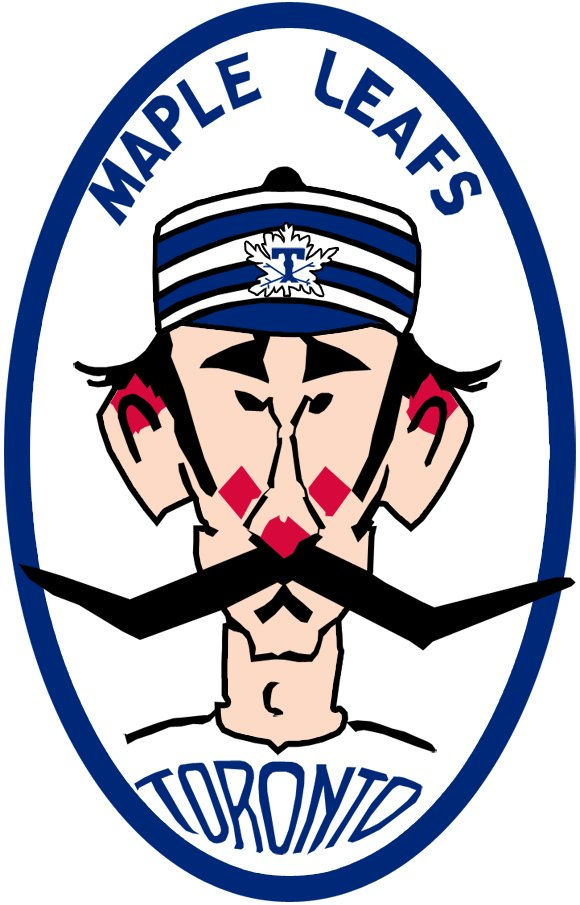
In 1926, the Maple Leafs would move into Maple Leaf Stadium, located near the corner of Bathurst Street and Lake Shore Boulevard, right around halfway between the city's two future MLB stadiums — Exhibition Stadium and Rogers Centre. The Maple Leafs won the pennant during their first season in the new ballpark, marking the 6th championship in franchise history. The next year, in 1927, the NHL's Toronto St. Patricks would change their name to the Maple Leafs to symbolize Canada, which has stuck ever since. Of course, trademark and copyright laws were not the same a century ago, especially in the sports world. However, there are many historical examples of franchises in the same city sharing a name; most notably the St. Louis Cardinals and New York Giants of the NFL and MLB.
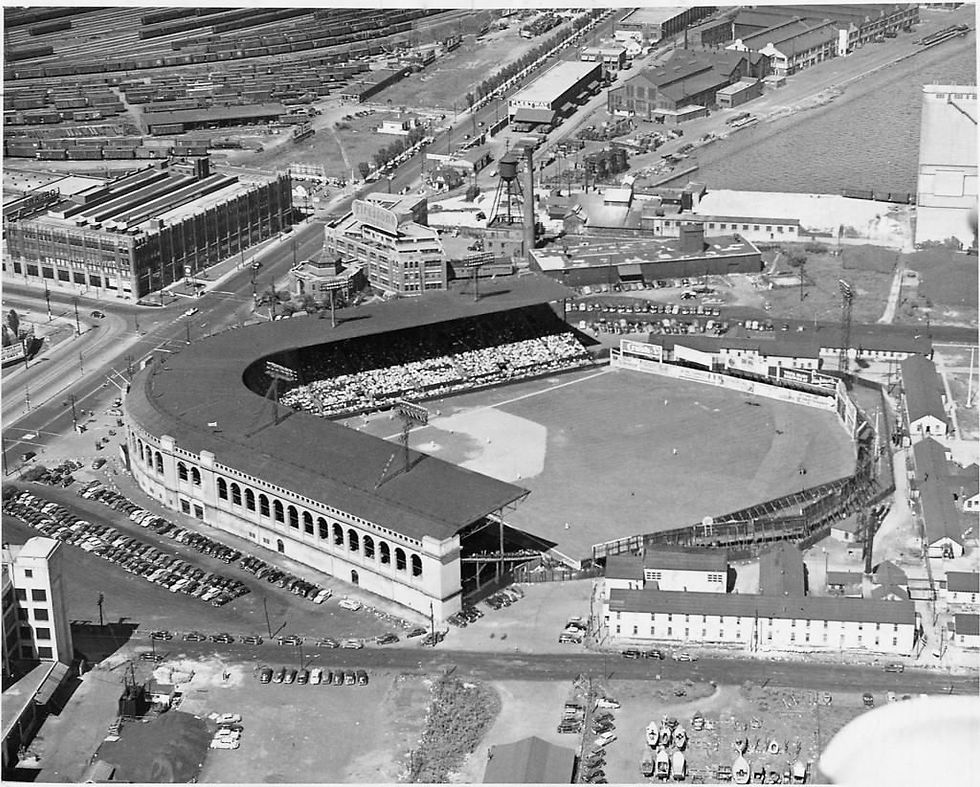
After decades of success, the 1930s would bring on some tough times for the Maple Leafs. During a period of financial struggles, the Maple Leafs would reach their lowest point in 1932, losing 113 games with only around 50,000 total fans in attendance throughout the season — only a little over double the capacity of Maple Leaf Stadium. Later in the 1940s, after the death of team president George Oakley, the Maple Leafs were on the verge of leaving Toronto.
New team president Peter Campbell would be the one so save the franchise, reaching a deal to be affiliated with the Pittsburgh Pirates and winning the International League pennant in 1943 — breaking a 16 year drought.
In 1951, the Maple Leafs were bought by Jack Kent Cooke. Cooke was a media and sales guru, running various news outlets across eastern Canada. Cooke's ownership brought great success to the Maple Leafs, consistently being at the top of the IL for attendance. This was in part due to Cooke's promotions and marketing ideas — something incredibly common in sports today. During his first game as owner, Cooke gave every fan in attendance free hot dogs and drinks, brought celebrities for guest appearances, and pioneered the playing of music over the stadium's PA system in between innings. Cooke also had suggestion boxes placed throughout Maple Leaf Stadium, signifying a fan-first approach that seems to be largely lost in major league sports today.
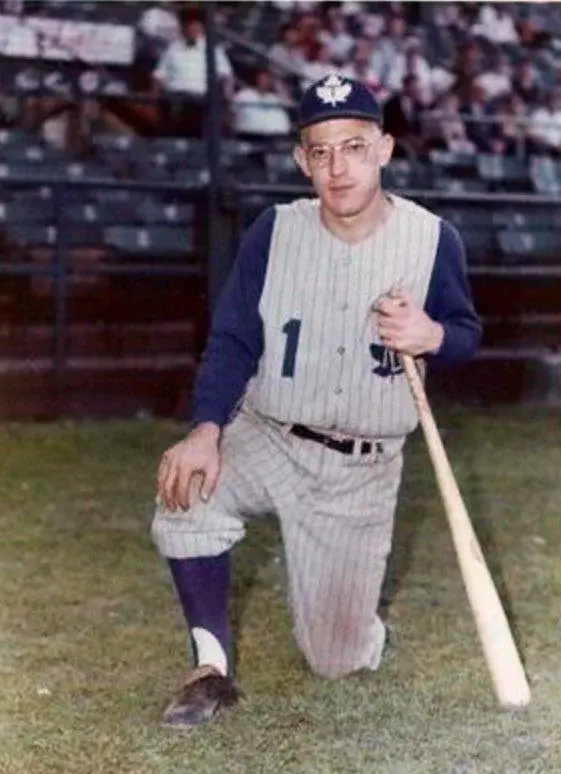
Another future Hall of Famer would join the Maple Leafs in 1960, with infielder Sparky Anderson signing in Toronto after a lackluster first (and only) big league season with the Philadelphia Phillies. Anderson would be named manager in 1964, which would be the first job of a Hall of Fame managerial career, winning 3 World Series titles with the Cincinnati Reds and Detroit Tigers.
In 1961, Cooke went to the United States to pursue better business opportunities. This would notably include ownership in the Los Angeles Lakers, Los Angeles Kings, and Washington Redskins — as well as their venues of The Forum in Inglewood, California and Jack Kent Cooke Stadium (now Northwest Stadium) in Landover, Maryland. Despite the Maple Leafs retaining its on-field success in the 1960s, the club was still losing hundreds of thousands of dollars per season. Due to the aging Maple Leaf Stadium and MLB games starting to be widely broadcasted on television amongst other factors, the Maple Leafs were no longer sustainable in Toronto. Owner Robert L. Hunter was trying to find an owner who would keep the franchise in the city, including the ownership group of the NHL Maple Leafs, but was ultimately unsuccessful.

On September 4th, 1967, the Maple Leafs would play their last game in Toronto in front of 802 fans. The Maple Leafs were soon sold to a group who would relocate the team to Louisville, Kentucky before relocating again to Pawtucket, Rhode Island five years later. The franchise still exists today as the Worcester Red Sox, Boston's Triple-A affiliate. Maple Leaf Stadium was quickly demolished, leaving Toronto without a professional baseball club or venue. Ironically, the baseball Maple Leafs' final season was also the last time that the NHL Maple Leafs reached the Stanley Cup Finals. Could the baseball team's departure be contributing to the Leafs' "curse" since 1967? Who knows, but something fun to think about!
Pushes for Major League Baseball
Toronto had been discussed as an expansion destination for decades, including during MLB's 1969 expansion which added four teams, including Canada's Montreal Expos. The Expos achieved record-setting attendance figures at Jarry Park, setting a prescedent for Major League Baseball in Canada.
In the 1970s, the San Francisco Giants were in great turmoil. The team's home of Candlestick Park was a disaster, in large part due to its poor location on the San Francisco Bay resulting in cold nights at the ballpark. In addition, the Giants had to compete with the Oakland Athletics for competition in the Bay Area, who had just won three consecutive World Series titles from 1972-74. The franchise was set to be sold for $13.25 million to a Toronto-based group including Labatt Breweries, The Globe and Mail, and CIBC. Exhibition Stadium, home of the Toronto Argonauts, had been retrofitted for baseball and was where the Giants had planned to play their home games. However, an 11th hour court ruling and sale to San Francisco's Bob Lurie kept the Giants in California.
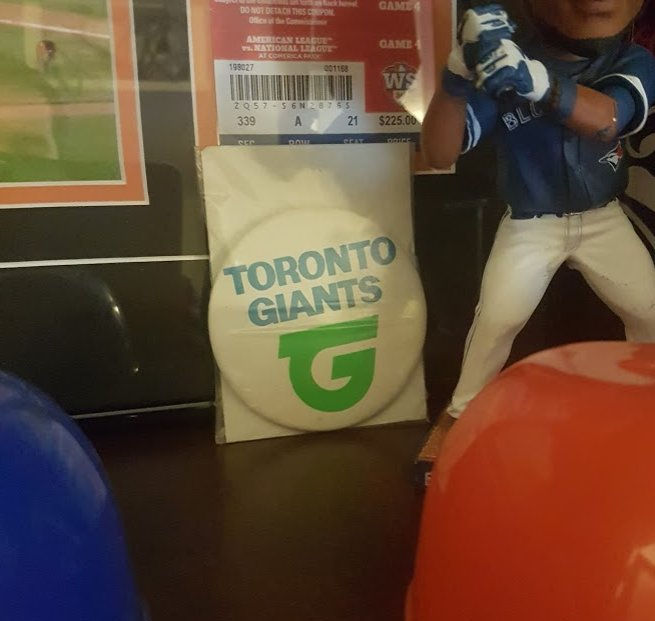
Later that year, the same ownership group who had attempted to purchase and relocate the Giants would be granted an American League expansion franchise for 1977, and the Blue Jays were born. The Blue Jays seem to largely ignore Toronto's lengthy baseball history, but it would be amazing to see that change. As long as there are no legal issues with the NHL team, I would love to see the Blue Jays don Maple Leafs throwback uniforms for a game, or potentially baseball Maple Leafs-inspired City Connect uniforms.
Comments